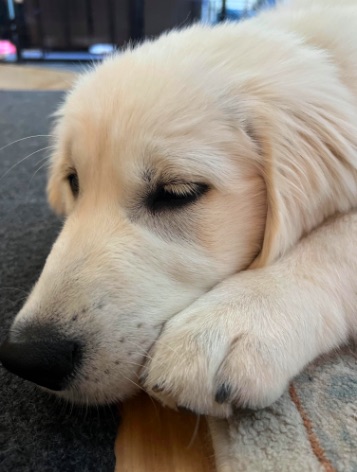
Summer can be fun, but for puppies, it can also be risky.
Unlike adult dogs, puppies cannot regulate their body temperature as efficiently. Their systems are still developing, which makes them more vulnerable to both overheating and chilling. In warm weather especially, this puts them at a higher risk for heat stress and even heat stroke.
On top of that, puppies don’t always know when to stop playing.
They will keep running, exploring, and engaging long past the point where they should rest and cool down. That combination—an immature system and no internal “off switch”—means it’s up to us to watch closely and step in when needed.
Some of the key warning signs of overheating in puppies include excessive or frantic panting, labored breathing, bright red or very pale gums and tongue, drooling or foaming, and signs of weakness or unsteadiness. These are not signals to “wait and see”—they’re signs to act quickly and cool your puppy down.
This past week in Western WA gave us a real-life reminder of how quickly heat can affect a young dog.
We experienced a multi-day heat wave, complete with weather alerts on our phones. Every lake, river, and pond was packed with people trying to cool off. And, of course, our heat pump decided to break right at the start of it all.
At night, we managed by opening windows and letting cooler air move through the house. But during the day—and especially into the evening—the temperature inside would climb. By nighttime, our home felt less like a place to relax and more like a sauna, often reaching over 85 degrees.
At first, we missed the subtle changes in Meadow. The extra nap. The cute tung hanging out of her mouth and play and training sessions seemed to go off the rails quickly. She just had no focus.
Meadow, our 16-week-old Cedar Rock Golden Retriever puppy, began showing subtle signs that the heat was affecting her. On Friday we caught on, she started taking longer naps than usual and developed loose stools. By Saturday, she was still eating and drinking normally, but the loose stools continued.
Sunday brought some improvement during the day, but by evening, the symptoms returned.
By Monday morning, we decided to play it safe and brought a stool sample to our veterinarian. It came back negative for common issues, which helped rule out infection or parasites.
On Tuesday, Meadow seemed back to normal again, and we even enjoyed a lake outing with paddleboarding and swimming. But once evening came—and the indoor temperature rose again—the symptoms returned.
At that point, the pattern was clear.
It wasn’t something she ate. It wasn’t illness.
It was the heat.
Even though 85 degrees might not seem extreme, for a young puppy in an indoor space without consistent cooling, it can be enough to stress their system. In Meadow’s case, that stress showed up as digestive upset and increased fatigue.
So we adjusted.
We focused on keeping her environment as cool and calm as possible. Activity was limited during the warmest parts of the day. We supported her system with a bland diet (boiled chicken, no sodium broth, rice) and added probiotics, and offered dehydrated Olewo Original Carrots for Dogs – it is the perfect fiber for Perfect Poop). And of course, we made sure she had plenty of water, rest—and yes, snuggles.
By wednesday, she stabilized and the heat pump was fixed. 🙂
This experience was a good reminder that heat doesn’t always show up in dramatic ways like collapse or severe distress. Sometimes, especially in puppies, it shows up more subtly—changes in energy, digestion, or behavior.
As breeders and puppy owners, it’s our responsibility to notice those changes and respond early.
Because when it comes to heat and young dogs, prevention and awareness make all the difference.
Leave a Reply