Learning and Growing:
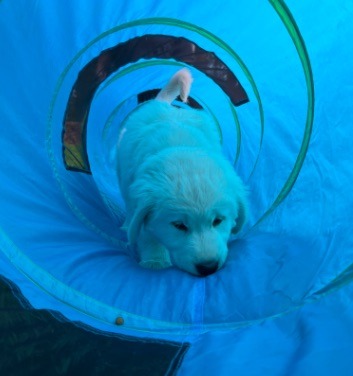
The most important time for learning and growing for your puppy will take place in the first 12 weeks. Having a plan in place for this window is essential to your puppies development. You’re trying to help your puppy grow into the best dog that they can be. You want them to learn to be resilient, friendly, reliable, trusting and trustworthy members of your family. There are many resources out there to support you in your journey with your new puppy and your puppy is counting on you to be prepared. See below for reading, videos and training suggestions. Do not go it alone. Have a plan.
The first 12 weeks of a puppy’s life are critical.
Key milestones include developmental growth (0–8 weeks) followed by transitioning into new homes (8–12 weeks). This is when you take over. We have put everything we can into these puppies and now it is your turn. Focus on socialization, basic commands using positive reinforcement, house training, and starting vaccinations. Their little brains are developing very quickly. Don’t let this important window pass you by.
Key Stages & Development
- Weeks 0-4 (Neonatal & Transition): Puppies are entirely dependent on their mother, learning to walk, bark, and socialize with littermates.
- Weeks 4-7 (Awareness & Play): They begin eating solid food, using the bathroom on their own, and playing, learning bite inhibition.
- Weeks 8-12 (Socialization & Training): This is the prime time to bring your puppy home, as they are impressionable and ready to learn. Socialization is crucial; they should meet new people, see new environments, and experience safe interactions.
- Weeks 12–16 Weeks (Independence Phase): Puppies develop more adult-like behaviors and stronger bladder control (3-4 hours). They may begin teething, requiring safe, age-appropriate chew toys.
Common Challenges:
- Teething: Around 12 weeks, puppies may begin experiencing gum discomfort, requiring plenty of safe chew toys.
- Puppy Blues: It is common for owners to feel overwhelmed with the demanding schedule of training, house training, and constant supervision.
- Socialization: Make a plan to introduce your puppy to new people, places and things safely. Protecting your puppy is super important during this time, but so is introducing them to the world. Try using a stroller in public places. Understand that you may have to take calculated risks until your puppy is fully vaccinated.
- How to Stop Biting and Other Frequently asked Questions: https://empoweredpuppyschool.com/frequently-asked-questions/ and https://www.kerrynichols.com/training
Our Training Program:
Before your puppy arrives at your home, they have already been through a lot of pre-training with us. We take our interactions with your puppy seriously. For new puppies, this early work is critical for brain development. We take full advantage of the brief time we have with them, filling it with essential age appropriate socialization and safe environmental exposure. We are placing the building blocks for a resilient, confident, friendly, reliable, trusting and trustworthy dog.
Specifically, we utilize many of the ideas from the Puppy Culture method. We recommend their course for new puppy owners. It is a comprehensive, science-based program for breeders, focusing on raising puppies from birth to 12 weeks. It includes early neurological stimulation (ENS), socialization, and emotional resiliency.
We also use the foundations in Kerry Nichol’s book “Puppy Brain” and OF COURSE the online training courses offered by Kim Paciotti at https://empoweredpuppyschool.com/courses/ If you contact Kim, please let her know that we sent you. 🙂
We also have from time to worked with trainers from the Karen Pryor Academ
One final recommendation, if you read all of this info and your still looking for more, check out the AKC’s website for the AKC STAR Puppy class. It’s a great way to get your puppy started with good manners.
Reading suggestion:
Start with “Puppy Brain” How Our Dogs Learn, Think, and Love by Kerry Nichols
Then, if you are a reader or an audible addict, move on to:
- The Puppy’s Perspective, by Kim Paciotti
- Puppy Start Right: Foundation Training for the Companion Dog, by Kenneth M. Martin & Debbie Martin
- Control Unleashed, by Leslie McDevitt
- Plenty in Life is Free: Reflections on Dogs, Training and Finding Grace, by Kathy Sdao
- Puppy Socialization, An Insider’s Guide to Dog Behavioral Fitness, by Caryl Wolff
- Train Your Dog Positively, by Victoria Stilwell
- The Puppy Whisperer, A Compassionate, Nonviolent Guide to Early Training and Care, by Paul Owens and Terence Cranendonk
- The Dog Whisperer, A Compassionate, Nonviolent Approach to Dog Training, by Paul Owens • Don’t Shoot The Dog!, by Karen Pryor
- Inside of a Dog, What Dogs See, Smell, and Know, by Alexandra Horowitz
- Mother Knows Best” by Carol Lea Benjamin
- How To Raise a Pup You Can Live with by Clarice Rutherford, David H. Neil
- The Art of Raising a Puppy by the Monks of New Skete
Video suggestions:
Kerry Nicichols is the author of “Puppy Brain”. She has gathered a great list of her favorite posts about training and training videos. Here’s a link to her list: https://www.kerrynichols.com/training
Kim Paciotti the author of ‘The Puppy’s Perspective’, She shares the foundation of her research and training philosophy. Follow her on Instagram https://www.instagram.com/empoweredpuppyprogram/ or on facebook https://www.facebook.com/trainingcanines
Puppy Culture is another great resource. A link to their popular podcast episodes can be found at https://shoppuppyculture.com/pages/latest-podcasts
In person training suggestions: The following links will help you find positive trainers in your area.
For online training try:
Kim Paciotti’s online training school for puppy owners at https://empoweredpuppyschool.com/ She focuses on early development and preparing puppies for real life success. We love, love, love Kim’s approach to training puppies.
Specific Trainers in WA that we recommend:
Elizabeth at Pawsitive State of Mind on Camino Isalnd https://www.pawsitivestateofmind.com/meet-the-trainer Her programs use positive-reinforcement and marker-based training to provide clear, effective, and scientifically-proven modifications to animal behavior. These methods are utilized in highly-renown programs such as zoos to train exotic and large mammals as well!
Judy Bardsley at Happy Pup Training Happy Pup Training offers positive reinforcement dog training classes and private dog training services in the Anacortes, North Whidbey, La Conner, and Mount Vernon areas.
If you are local to the North of Seattle area and you are interested in Dog Shows, we have trained with and recommend Kim Leslie, in Woodinville – of Leslie K9 Enterprises. Kim trains puppies and dogs for Conformation, Rally, Obedience, Barn Hunt and Agility. She currently offers Puppy classes, Dog Show handling classes and Canine Good Citizen / Trick Dog https://www.lk9ellc.com/
If you are local to the South of Seattle area and you are interested in Dog Shows or even just basic obedience, we recommend Tricia LiAna at Little Miss K9 https://www.facebook.com/LittleMissK9.DogTraining/ She is in Tacoma. Her business model is a little more customizable than most. She follows the guidelines of LIMA, ethical science based, and positive reinforcement training. To train dogs with the least amount of adversity as possible. Creating strong communication and relationships between dogs and their owners. She does not just train, sit down and stay. She also focuses on teaching your dog how to make good choices when not given a command to follow. She helps to make sure that you understand all aspects of your dog and its breed. To be able to do everything from grooming, nutrition, mental and physical enrichment and obedience to the level of which you are seeking.