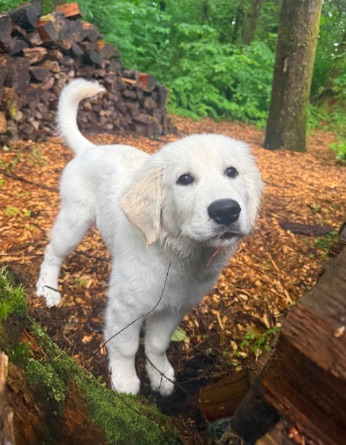
Bringing home a Golden Retriever puppy is exciting, joyful, and often a little overwhelming. There are so many things a new Golden Retriever puppy will eventually learn—but during the first few weeks at home, the goal is not to teach everything at once.
Instead, focus on the lessons that help a Golden Retriever puppy feel safe, confident, and comfortable in everyday life. These early experiences lay the groundwork for future training, family routines, grooming, veterinary care, travel, and time spent away from home.
At Cedar Rock Golden Retrievers, we believe puppy training should be positive, patient, and part of your daily routine. Positive reinforcement means rewarding a Golden Retriever puppy for making good choices, rather than focusing on punishment for mistakes. When your Golden Retriever puppy does something you would like to see again—such as coming when called, sitting politely, chewing an appropriate toy, or looking at you—reward that choice right away with praise, a treat, play, or affection.
Golden Retriever puppies do not need long or formal training sessions. A few happy minutes at a time, repeated throughout the day, can create a wonderful foundation.
Begin With Routine and Potty Training
A predictable routine is one of the kindest things you can give a new Golden Retriever puppy. Regular times for meals, naps, play, quiet time, and potty breaks help a puppy begin to understand what to expect.
Take your Golden Retriever puppy to the chosen potty area after waking up, after meals, after play, and before bedtime. When your puppy goes in the right place, quietly praise and reward right away.
Accidents will happen, especially during the first weeks. If you catch your Golden Retriever puppy in the moment, calmly guide the puppy outside. If you find an accident later, simply clean it up and focus on more supervision and more frequent potty opportunities next time.
Consistency, patience, and preventing accidents whenever possible are the keys to house training.
Socialization: New Experiences Every Day
For Golden Retriever puppies who are still in the early socialization period—generaly before 14 weeks of age—socialization is one of the most important priorities.
Socialization is about much more than meeting other people or Golden Retrievers. It means gently introducing a Golden Retriever puppy to the sights, sounds, surfaces, places, and everyday experiences that will be part of life.
Whenever possible, plan for your Golden Retriever puppy to have a new experience each day. That might include:
– A short car ride
– Sitting outside and watching bicycles, strollers, or people pass by
– Walking on grass, gravel, wood, carpet, or a textured mat
– Hearing household sounds such as the vacuum, dishwasher, or doorbell from a comfortable distance
– Visiting a friend’s home
– Meeting calm, puppy-friendly visitors
– Watching the world from a safe distance at a park, store entrance, or outdoor café
The goal is not to overwhelm a Golden Retriever puppy or force interaction. The goal is to help your Golden Retriever puppy learn that new things can be safe and positive.
Bring treats, allow plenty of breaks, maybe try a puppy stroller and pay attention to body language. If an experience feels too big, create more distance or try again another day. Positive experiences matter far more than how many places you visit.
Practice Gentle Body Handling
Golden Retrievers will need their paws cleaned, nails trimmed, ears checked, coats brushed, temperatures taken and bodies examined throughout their lives. Beginning gentle handling early can help these routine moments feel familiar instead of stressful.
A few times each day, take just a few seconds to calmly touch your Golden Retriever puppy’s paws, ears, tail, collar, and mouth. Lift a paw, look between the toes, briefly touch an ear, or gently hold the collar, then offer a small treat and quiet praise.
The goal is to help your Golden Retriever puppy learn that handling by family members is safe, predictable, and rewarding. These small moments can make grooming appointments, nail trims, and veterinary visits much easier later on.
Prevent Resource Guarding Early
An important early lesson is helping a Golden Retriever puppy feel comfortable when people are near food, treats, toys, or favorite chews.
Rather than taking things away without warning, practice approaching your Golden Retriever puppy and adding something better. For example, walk past the food bowl and drop in a special treat. Offer a high-value treat in exchange for a toy, then give the toy back. This teaches your Golden Retriever puppy that people approaching do not mean something good will disappear—people often bring even better things.
You can also practice calm, gentle interruptions during play. Briefly pick up your Golden Retriever puppy, offer a treat, and place the puppy back down to continue playing. This helps your Golden Retriever puppy become more comfortable with everyday handling and small pauses in activity.
Keep these exercises relaxed and positive. The goal is to build trust, not to create conflict around things your Golden Retriever puppy values.
Create Positive Crate and Alone-Time Skills
Crate training is not about isolation or punishment. When introduced gradually and positively, a crate, exercise pen, or puppy-safe area can become a cozy place for sleep, rest, meals, and quiet time.
Begin by allowing your Golden Retriever puppy to explore the crate with the door open. Toss in treats, offer meals nearby or inside, and provide a safe chew or stuffed food toy while your puppy relaxes. Once your Golden Retriever puppy is comfortable, close the door for a very short time while you remain nearby, then slowly build from there. Start with seconds and build to minutes. Take it very slowly., making sure that your puppy is not worried or fearful.
It is also helpful to begin brief, calm periods of independence in their puppy zone. After a potty break and a little play, settle your Golden Retriever puppy in a safe space with an appropriate chew, then step away for a few minutes. Gradually increasing this time can help your Golden Retriever puppy learn that being alone is safe and that family members always return.
There is no need to rush these processes. The goal is simply to begin building a positive association with rest, confinement, and short periods of independence.
Teach Your Golden Retriever Puppy to Think
One of the most valuable things a Golden Retriever puppy can learn is that trying something new is worthwhile.
Instead of always guiding your Golden Retriever puppy into a specific position with a treat, create simple games that allow your puppy to think, explore, and offer a behavior. Place a box, low platform, or sturdy object on the floor. When your Golden Retriever puppy looks at it, walks toward it, touches it with a paw, or steps onto it, praise and offer a treat. We use an old surf board for this training. The pictures are priceless.
There is no single “right” answer in this game. The point is to help your Golden Retriever puppy become confident, creative, and engaged in the learning process.
This kind of positive training teaches a Golden Retriever puppy that offering a behavior can lead to good things. Learning is fun! Your puppy’s willingness to try new things will be helpful as you introduce practical skills later on.
Teach Their Name and Encourage Attention
One of the first things a Golden Retriever puppy should learn is that hearing their name means something good is about to happen.
Say your puppy’s name in a cheerful voice. Try saying it 3 times, “Meadow, Meadow, Meadow.” When your Golden Retriever puppy looks toward you, immediately offer praise and a treat. Practice this multiple times in a calm, low-distraction places throughout the day.
You can build on this by teaching a simple “look” or “watch” cue. Reward your Golden Retriever puppy whenever they choose to check in with you—whether you are in the kitchen, playing in the yard, or sitting outside together.
A Golden Retriever puppy who learns that paying attention to family members is rewarding has an important foundation for recall, leash walking, and navigating new environments.
Build a Strong Recall
Recall—coming when called—is one of the most important practical skills a Golden Retriever puppy can learn. It can save them from all kinds of difficult situations.
The good news is that recall practice can happen naturally throughout the day. Every time your Golden Retriever puppy comes toward you, happily say your chosen recall word, such as “come” or “here,” and reward generously with a treat, praise, play, or affection.
In the beginning, avoid using the recall cue only when something fun is about to end. You want your Golden Retriever puppy to learn that coming to you is always a wonderful choice. Make coming to you the happiest thing that can possibly happen. Think pets, snuggles, hugs and a treat dispenser on overdrive.
Practice indoors, in a fenced yard, or on a long line in a safe area. Keep recall easy, joyful, and rewarding. A strong recall is built through many small, successful repetitions.
Introduce Leash Walking Gently
A young Golden Retriever puppy does not need formal leash walks right away. Early outings may include more carrying, observing, wandering, and exploring than walking in a straight line.
Still, it is helpful to introduce leash skills early. Let your Golden Retriever puppy wear a collar or harness for short periods indoors while receiving treats, playing, or enjoying a meal. Then attach a lightweight leash and practice taking a few steps together in a quiet, familiar area. Practice taking their leash on and off multiple times throughout the day without going anywhere. Have them sit calmly and put it on, walk a couple of boring steps and sit again to take it off. The goal is to have an adult dog someday, that doesn’t go crazy and knock you over every time they see the leash.
Reward your Golden Retriever puppy for choosing to walk near you and for keeping the leash loose. Reward them for making eye contact with you while they are walking. Starting early helps leash walking feel natural and enjoyable. Waiting until a Golden Retriever puppy is older, stronger, and used to pulling can make the process more difficult. About pulling: Don’t let them pull you. If you can, have them sit still until they walk with you on the loose leash. If they can not. Leash time is over. Scoop them up head home. Don’t practice behaviors you don’t want them to repeat.
Teach Everyday Household Manners
The first weeks at home with you are also a wonderful time to begin shaping the habits that will make life together easier.
Offer plenty of appropriate chew toys, and calmly redirect your Golden Retriever puppy when chewing is directed toward hands, shoes, furniture, or household items. If puppy teeth become too enthusiastic during play, pause the interaction for a moment and redirect to a toy. Reward gentle play and calm choices.
You can also begin teaching a simple sit/wait before meals, before going outside, before greeting people, or before receiving a toy. These small moments help your Golden Retriever puppy learn that polite behavior is rewarding.
Notice and reward calmness, too. When your Golden Retriever puppy chooses to settle on a bed, lie quietly near the family, or relax after playtime, offer a soft “good puppy” or place a treat between their paws. Calm behavior deserves to be reinforced just as much as active training.
Keep Training Short, Safe, and Positive
This may sound like a lot, but most of these lessons take only seconds and fit naturally into your day. A treat dropped into a food bowl, a gentle paw touch, a quick recall game across the living room, or a few calm minutes in a crate all count as training.
Socialization is usually the area that takes the most planning. Think ahead about safe outings, calm visitors, puppy-friendly playdates, and new experiences you would like your Golden Retriever puppy to have. A little preparation can make those early weeks feel much easier.
At Cedar Rock Golden Retrievers, we believe the best puppy training is built through patience, consistency, positive reinforcement, and trust. Your Golden Retriever puppy does not need to be perfect. Your Golden Retriever puppy simply needs the opportunity to learn that home is safe, people are kind, and trying new things can be fun.
Leave a Reply