It should not be this hard to find a mentor
When we started Cedar Rock Golden Retrievers, the advice we heard most often was “find a mentor.” We were lucky in some ways. From the star, we had a few good mentors around us that supported and encouraged us. They pointed out the places to go to learn and held our hand through the basics of getting started. They taught us to troubleshoot the problems that will inevitably come up. we are grateful for all of them! Still, it really takes a village. No breeder can or should go it alone. There are just some things you can not learn on the internet or with the help of AI. Some things you just do better when you know better because someone showed you and learning really gets real when you have a good mentor pointing things out. The biggest hole in our early mentorship has been in the show ring. We watch videos, listen to podcasts, read books, attend shows, go to classes and even enter shows. We sent polite emails, showed up at shows and looked for ways to interact respectfully, looking for friendship and asking good questions, and more often than not we got silence, or a short reply that made it clear we were not welcome yet.
That experience is not unique to us. It is common enough that breed magazines, kennel club columnists and podcasts have all written about it. New breeders are told a mentor is essential, and then they find that the people who could mentor them are the same people deciding whether they are lucky enough to deserve one.
Before getting into why that happens, I want to be clear about where we stand. We are not asking anyone to lower the bar. We know what responsible golden retriever breeding requires, we are doing it, and we think most new breeders who stick around want to do it too. Here is what we mean by that.
Health comes first, and it takes years
The Golden Retriever Club of America asks that every dog used for breeding be screened for hip dysplasia, elbow dysplasia, inherited eye disease and heart disease, with the results placed in a public database such as the OFA’s. Several of these exams cannot be finalized until the dog is two years old, which means a responsible breeder is waiting, not breeding, for the first two years of a dog’s life. Here is what each clearance involves, per GRCA’s health screening guidance and the OFA.
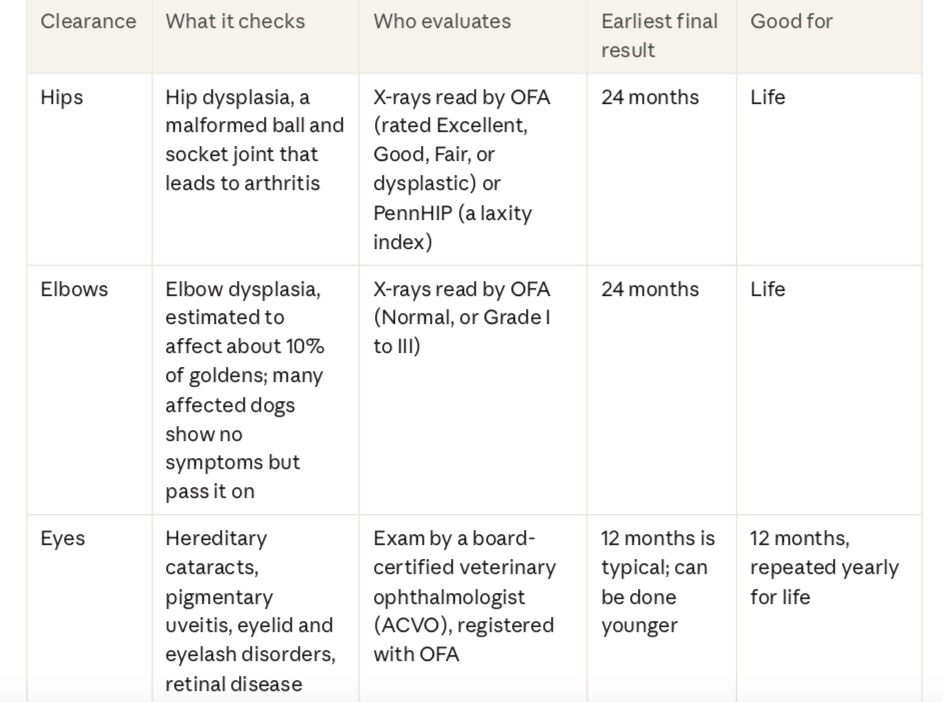
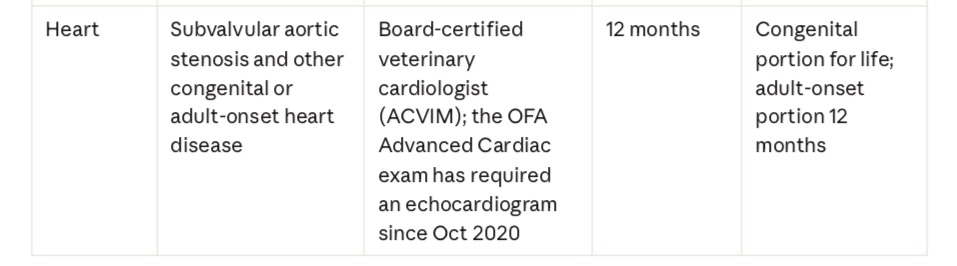
A few points that matter when you are evaluating a breeder, or being evaluated as one:
Preliminary hip and elbow films can be taken earlier, but they are not clearances. The OFA will not issue a final number before 24 months because the joints are still developing. A breeder who tells you a one-year-old is “cleared” on hips is describing a preliminary opinion.
The eye exam is not one and done. GRCA recommends a yearly exam for the life of any dog that has been bred, mainly because pigmentary uveitis tends to show up in middle age or later.
Heart exams come in two tiers. A basic exam is a stethoscope check that any veterinarian can do. The advanced exam is done by a cardiologist with an echocardiogram and screens for both congenital and adult-onset disease. The advanced exam is the one serious golden breeders use.
DNA tests are the easy part. They are inexpensive and can be run on a puppy. A carrier is not a problem as long as the mate is clear; GRCA states this explicitly for PRA, and the same logic applies to ICH1 and NCL. What a breeder should never do is pair two carriers of the same recessive condition.
When all four clearances are complete and public, the OFA issues a CHIC number. It is the thing to look for on a breeding dog’s record.
Clearances on the parents alone are a start. GRCA notes that health testing across grandparents and great-grandparents offers additional protection, because these are polygenic conditions and a single generation of clear results does not tell the whole story.
We test for all of this at Cedar Rock. Our foundation female has her full Embark panel, and her eyes, heart, hips and elbows will be done on the GRCA schedule before she is ever bred. We also check coefficient of inbreeding on any proposed pairing, and we do not breed to studs whose owners will not share clearance information.
Temperament is in the standard, not optional
The AKC breed standard for the golden retriever, written by GRCA and in effect since 1990, spends more words on how the dog should behave than many people realize. The general appearance section calls for a dog with a kindly expression and a personality described as eager, alert and self-confident. The temperament section is short and direct: the golden is to be friendly, reliable and trustworthy. Hostility toward dogs or people in ordinary situations, or unwarranted timidity or nervousness, is called out as contrary to breed character and is to be penalized according to how significant it is.
That language matters for breeders because temperament is heritable and it is also the first thing a pet family will live with every day. A dog can have perfect clearances and a beautiful outline and still be the wrong dog to breed if it is sharp, anxious or reactive. We watch for stable, resilient, people-oriented puppies, we run our breeding dogs through CGC and therapy work because those settings reveal temperament under pressure, and we would pass on a stud with a questionable disposition no matter how well he has done in the ring.
Structure: what the standard actually asks for
The standard describes a symmetrical, powerful, active hunting dog that is sound and well put together, neither clumsy nor leggy, shown in hard working condition. It explicitly says overall balance, gait and purpose should count for more than any single part. Here is the picture it paints, in plain terms.
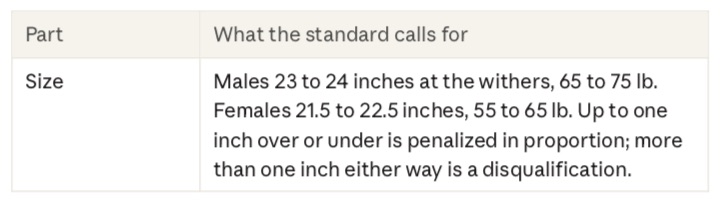
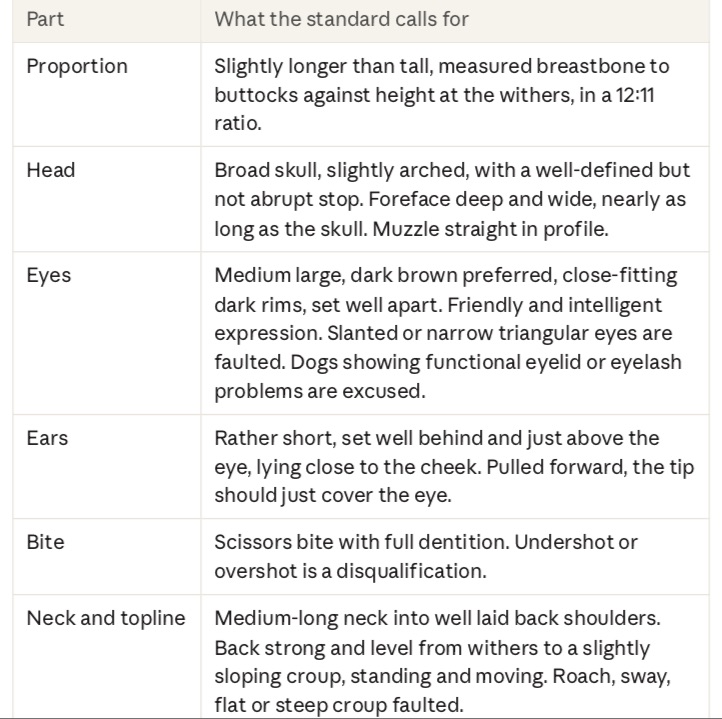
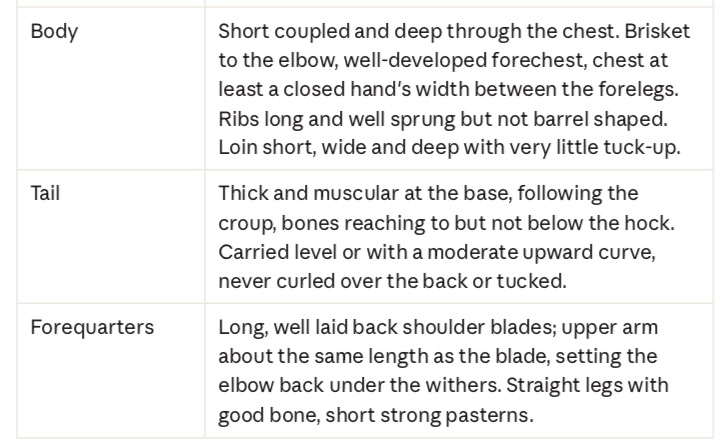
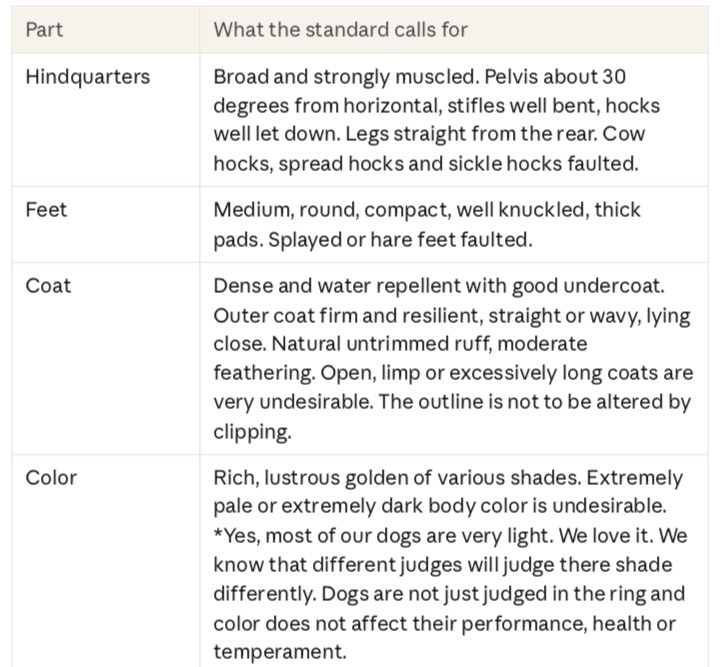

We pay particular attention to front assembly, topline and the eyes, because those are where we most often see dogs drift from the standard, and we have passed on otherwise appealing studs over droopy eyes alone. We also take the size ranges seriously. The standard is clear that the golden is a moderate dog, and oversized or overdone dogs are not what it describes.
So, there it is, health, temperament, structure. We know the list. We are working the list. It’s impossible to be a breeder in 2026 and not know that the list exsist. So, let’s assume that there are good people out their trying to follow the the list. Instead of assuming nobody ense has access to to basic information that it shared WIDELY and good reason all over the internet, social media and right out of the mouth of every vet. Let’s just assume that you don’t have to learn about these things by word of mouth, from someone that has 15 years of show experience or more. That is simply not the case. Yes, some people are bad and don’t care, but let’s be realistic and concede and acknowledge things are not as hard to learn as they once were. Let’s also confess that no dog is perfect. Yes, NO DOG IS PERFECT! They are all individuals and each breeder does there very best to bring dogs into their program that are as close to perfect as they can be, but… NO DOG IS PERFECT! It’s a balancing act. We are all doing the very best that we can. The ultimate goal of every responsible breeder should always be to breed to improve the breed. We all start somewhere and we choose mates that balance out those imperfections to produce healthier, better structured, more easy going puppies in the next generation.
Now let’s talk about what happens when a new breeder who knows the list goes looking for help building a continuously improving program with every generation moving closer to the ideal.
Why the gate gets kept
Gatekeeping is not a word new breeders made up. 5 days ago, the Pure Dog Talk podcast with Laura Reeve, chose gatekeeping as the topic for their 759th episode. It is also the title of a 2024 Pure Dog Talk episode, the subject of a 2022 AKC column by longtime editor and judge Allan Reznik, and a recurring theme in the popular Showsight magazine. When you read what established breeders themselves say about it, the reasons sort into a handful of categories. Some are understandable. Some are not. They are reactive, possessive, guarding, snappy, and sometimes even vicious. Yeah, just like dogs with bad tempers.
Possessive “You haven’t earned it yet.” The most common one. Experienced breeders have spent decades and a great deal of money building their lines, and they see a newcomer with one dog as someone who has not paid the dues. Reznik describes a newcomer being told flatly that breeders would not sell to anyone who had not owned the breed before. Or if they had not shown them. He calls it a Catch-22: how does anyone get experience if nobody will sell them a dog?
Snappy “My dogs are better than what’s out there.” On the Pure Dog Talk episode, one long-time breeder said she keeps her name on every dog until a new owner meets her criteria, because anything carrying her kennel name has to meet her idea of quality. That is a defensible position for her own dogs. It becomes gatekeeping when it turns into a general attitude that new people’s dogs, and by extension new people, are not worth the time.
Guarding “I got burned before.” Breeders have had puppies end up in bad situations, had co- ownership agreements fall apart, and been blamed for what buyers did. Reznik notes that these experiences have pushed more breeders into co-ownerships and restrictive contracts. He also describes contracts demanding puppies back from the next two or three litters, which he compares to pyramid schemes. A buyer who only wanted to show gave up and imported a puppy from Europe instead, where breeders with the same bloodlines were friendlier and less controlling.
Reactive “That’s a red flag.” Some wariness is just pattern recognition. Someone emailing every kennel for a “breeding pair” is going to get ignored, and Pure Dog Talk’s panelists said as much. But their own story is the point: one breeder took that person to lunch instead of adding them to a do-not-sell list, sold them a bitch on a co-ownership, and thirty years later that newcomer is a respected breeder. The red flag was ignorance, not bad intent, and a single conversation fixed it.
Possessive “The secrets are mine.” In coated breeds especially, Reznik writes about gatekeepers who have come to believe grooming and presentation can only be mastered by a small handful of people. Knowledge gets treated as a competitive advantage rather than something to pass down.
Guarding “We like the club the way it is.” Long-time club members in leadership positions can feel territorial when newcomers volunteer, and the result is that many new people never join a club at all. That is where mentoring is supposed to happen.
Snappy “I’m busy.” A Showsight column on mentors and newcomers notes that some experienced breeders are stretched thin by work and family and simply have no bandwidth, while others are just unwilling. The first group deserves grace. The second is the problem.
Vicious “They don’t know what they are doing.” Yes. everyone is starting somewhere. Tearing down their efforts, skills, or vision insteading taking them by the hand and partnering with them to improve their outcomes, doesn’t just hurt them, it hurts their dogs, the breed as whole and even the future of the breed.
Underneath most of these is a reasonable instinct: protecting the breed. Reznik’s phrase for what happens when that instinct goes too far is “unintentionally gatekeeping.” People who see themselves as guardians put up so many barriers that they frighten off exactly the people the breed needs. Good people that are doing their very best, just as those before them have done. It’s an act that is poisoning what is trying to be preserved.
We want to be honest about one more thing, because the articles and podcasts talk about this in the abstract and it is not abstract when it happens to you. We know first hand how hurtful the gatekeeping can feel when you are trying your hardest just to get started. It has been hard. Much harder than we expected. Being ignored stings, but you can tell yourself the person was busy. What we were not ready for was breeder bashing: the picking apart of a newcomer’s dog, the thoughtless and judgemental comments about who should and should not be allowed to breed, the warnings passed around about people whose only offense was being new or doing things differently than so and so. We have had our efforts minimize and our ambitions ignored more than once. We have driven home from shows wondering whether we belonged there at all. We kept going, but we understand completely why so many people do not. Nobody gets into goldens hoping to be torn down by strangers, and when it comes from the very people they were hoping to learn from, it lands harder than any ribbon can make up for. That mean spiritedness, more than any one closed door, is what drives new breeders out.
What it is costing the sport
The show dog world is shrinking, and the people writing about it say so in plain numbers.
AKC registrations peaked around 1.5 million dogs in 1992 and had fallen to about 564,000 by 2010, a drop of roughly 63%, according to figures cited in a 2017 Canine Chronicle article by breeder Peri Norman.
Carmen Battaglia, writing in Canine Chronicle, describes the conformation show as being in its fifteenth consecutive year of declining entries, with clubs reporting revenue shortfalls, superintendents reporting more “no show” breeds, and club memberships aging without replacement volunteers.
By 2017, more than 52 breeds were averaging fewer than one entry per all-breed show, and at some events nearly a third of breeds had no entries at all.
Battaglia’s analysis ties the decline to fewer litters registered, fewer breeders, more limited registrations, and shrinking breed populations. Every one of those is a pipeline problem. Fewer new breeders means fewer puppies, fewer entries, and fewer club members to put on the shows.
An AKC breed preservation webinar from 2018 fielded a question that is worth repeating: newcomers are importing stock because they cannot find mentorship here. Reznik’s 2022 column told the same story. It’s exactly the addvise we have been given.
Goldens are not a low-entry breed, so it is tempting to think none of this applies. But the mechanism is the same. Every newcomer who gets rebuffed and quits, or who gives up on showing and breeds pet puppies because nobody in the show community would talk to them, is a loss on two fronts. The show ring loses an exhibitor, and the breed gains a breeder who has to teach themselves the standard. The gatekeepers, trying to keep the breed in good hands, end up pushing it into hands of anyone who finds a way to survive despite them.
There is also a plain demographic reality. The breeders with twenty, thirty or even forty years of knowledge are in their sixties, seventies and eighties. If that knowledge does not get handed to someone, it is waisted. A Showsight column put it bluntly: think of the breeders who were revered when you started, and how many are gone, taking what they knew with them. Yes, you can learn in other ways, but you will not have as much fun and may not get as much out of it. Part of why most breeders get in to breeding is for the human interaction. They want to learn from and the teach people. They love love love everything about dogs and they want to share that joy with every human they meet. They are a lot like Golden Retrievers in that way. They think everybody should want to be their friend, that’s what the AKC and the GRCA are hoping is the case, and they are surprised when they find someone that doesn’t share their joy. They’re hurt.
What breeders can do instead
None of this requires lowering standards. It requires treating people respectfully and treating standards as something to work towards and strive for. Standards are something to teach rather than something to hide behind or use against others. Here is what support looks like in practice, drawn from what the writers above recommend and from what has actually worked for us.
1. Answer the email. Reznik points out that the old benched shows forced face-to-face conversation, and that it is much easier to ignore a faceless email today. A two-line reply that says “I’m not placing a puppy right now, but here is who you should talk to” costs nothing and keeps a newcomer in the sport.
2. Take them to lunch before you decide. The Pure Dog Talk story is the model. A newcomer asking the wrong question is usually uninformed, not dishonest. One conversation sorts out which.
3. Sell them a dog. Reznik’s definition of a true mentor is someone who assesses a novice, decides they are worth the risk, and then actually sells them a dog and trusts them to use what they have learned. Mistakes will happen. With a mentor involved they will be small ones.
4. Write contracts that protect the dog, not your ego. A spay-neuter requirement until clearances are done, a return-to-breeder clause, a commitment to show or title: all reasonable. Demanding puppies back from multiple future litters, or keeping your name on a dog indefinitely with no path to full ownership, is not mentorship. It is control, and it sends people overseas.
5. Share what you know about pedigrees and clearances. If a newcomer is evaluating a stud, tell them what you know about the line. If a different stud would suit their bitch better than yours, say so. Reznik makes this point directly: it shows you care about the breed beyond your own program.
6. Teach grooming and ring presentation. These are learnable skills, not trade secrets. Every newcomer who presents a golden well makes the whole breed look better in the group ring.
7. Make room in the club. Give new members a real job. Mentorship programs, which both the AKC Delegates’ Breed Preservation Committee and several parent clubs have pushed for, work best when they are run locally.
8. Introduce them to someone else. Nobody has to be the sole mentor. One of the Showsight columns argues against relying on a single mentor at all, partly because a controlling mentor is worse than none. Being one of five people a new breeder can call is a lighter lift than being the one.
9. Celebrate their wins. When a newcomer’s dog finishes or passes a clearance, say something. The breeders who rebuffed Reznik’s exhibitor warmed up only after her import started winning. Do it before that. It’s also important to be their when things go wrong. All breeders will face some adversity, that’s when a real mentors show up.
New breeders have a job here too. Show up. Join the club. Ask specific questions. Do the clearances before anyone asks. Take criticism of your dog without taking it personally. The people who have been doing this for forty years have earned the right to be skeptical for about one conversation. After that, the skepticism should be on them.
An open door
We did eventually find people willing to help us. A breeder two states away who answered a cold email with a phone call. A terrier breeder in the family who has nothing to gain from goldens and has talked us through whelping, contracts and the show entry form. Breeders who met us on an island vacation and handed us a phone number. Every one of them made the choice to open a door instead of guard one, and every one of them made us better breeders faster. That is the kind of breeder we intend to be. If you are new to goldens, new to showing, or just trying to figure out what a CHIC number is, you are welcome to ask us. We will tell you what we know, we will tell you honestly when we do not know, and we will point you to someone who does. We would rather have a hundred well-mentored new breeders in this breed than keep the circle small. The golden retriever standard asks for a dog that is friendly, reliable and trustworthy. It would not hurt for the people who breed them to meet the same bar.
Gabby, Cedar Rock Golden Retrievers cedarrockgoldens.com · CedarRockGoldens@gmail.com
| Sources GRCA, Health Screenings for the Parents of a Litter GRCA Code of Ethics GRCA Health Statement, March 2020 (AKC-hosted PDF) OFA, Cardiac Disease: Basic and Advanced Cardiac Databases OFA and ACVIM announcement on Advanced Cardiac exam changes, effective Oct 1, 2020 AKC DNA, Golden Retriever breed-specific DNA tests UC Davis VGL, Golden Retriever health panel Embark, Genetic Health Testing for Golden Retrievers AKC Official Standard of the Golden Retriever (GRCA) Allan Reznik, Loosening the Ties that Bind, AKC, May 12, 2022 Allan Reznik, Managing Trust Issues, Showsight, Oct 16, 2024 Showsight, The Bubble: Mentors and Newcomers Showsight, Newcomers Benefit from Mentors’ Knowledge Pure Dog Talk episode 621, Gatekeeping Within Our Breeds Peri Norman, Where Have All the Puppies Gone?, Canine Chronicle, June 2017 Carmen Battaglia, Are You Ready for a System Change?, Canine Chronicle AKC Breed Preservation Webinar Q&A, Sept 2018 |
Leave a Reply